
WELCOME BONUS 300%
UP TO €2000 + 100
FREE SPINS
UP TO €2000 + 100
FREE SPINS
Home → Games
Casino games at My Empire
9/6 table: nine for Full House, six for Flush
Video Poker Deuces Wild offers a specific paytable known as 9/6, referencing a payout of nine coins for a Straight Flush and six coins for a Flush. This particular configuration results in a theoretical Return to Player (RTP) of 99.73%. Players should note that this is a higher RTP compared to other versions of Deuces Wild, such as the 'Not So Ugly Ducks' variant which has an RTP of 99.73% for specific combinations.
The house edge on this 9/6 Deuces Wild variation stands at 0.27%, indicating a minimal advantage for the casino over the long term. This is favourable for players seeking games with a lower house edge. For comparison, Baccarat Player has a house edge of 1.24%, making the 9/6 Deuces Wild significantly more player-friendly in terms of potential returns.
Achieving this 99.73% RTP requires playing with optimal strategy and betting the maximum wager. Deviating from the optimal strategy can lower the RTP considerably. The 'Not So Ugly Ducks' variation, for instance, has a similar RTP but different payouts for certain hands like Five of a Kind, which is 16 instead of 15.
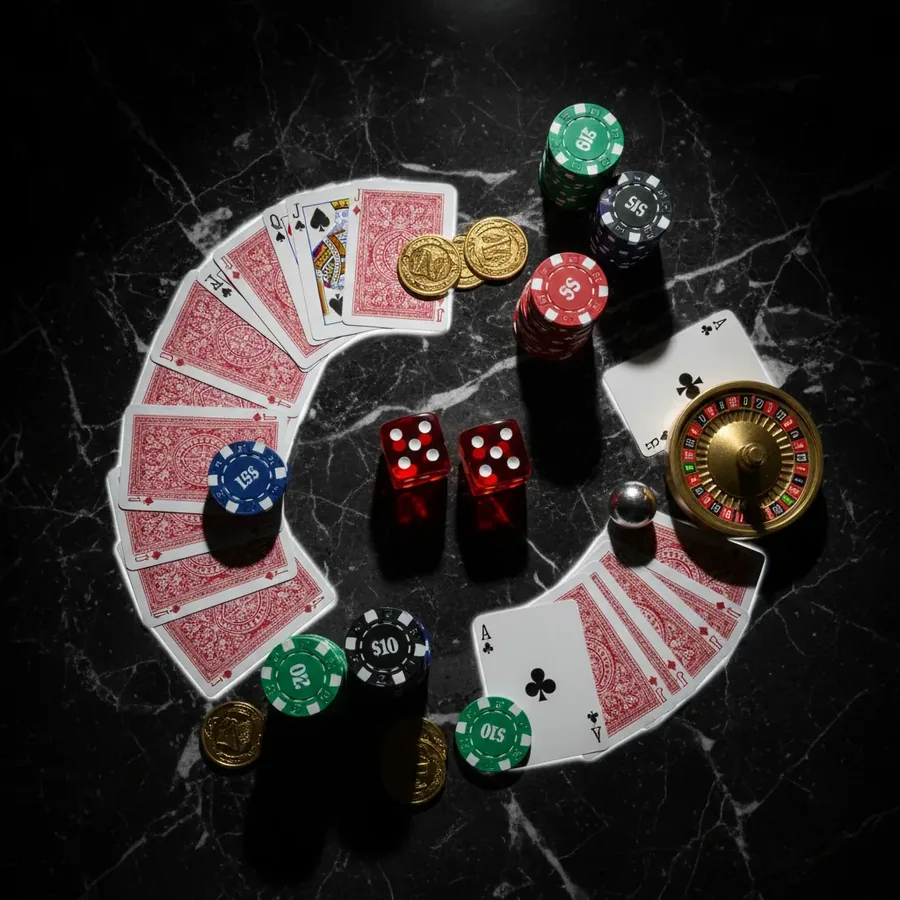
37 vs. 38 Sectors: What the Double Zero Costs
European Roulette features a wheel with 37 sectors, including a single zero (0). This setup results in a house edge of 2.70% across all bets. The payouts are structured as if there were only 36 sectors, creating a consistent casino advantage on every wager placed.
American Roulette, in contrast, adds a double zero (00) to the wheel, making a total of 38 sectors. Despite having the same payout structure as European Roulette, this extra sector significantly increases the house edge to 5.26%. This means players face a considerably higher disadvantage on American Roulette compared to its European counterpart.
The impact of the double zero is substantial; the house edge in American Roulette is nearly double that of European Roulette (5.26% vs. 2.70%). For instance, a Straight bet pays 35:1 in both versions, but the added sector in American Roulette means the casino retains more on average from each Straight bet placed.
Video Poker 9/6: What the Two Numbers Mean
The '9/6' designation in Video Poker refers to the payout ratios for specific winning hands: nine coins for a Straight Flush and six coins for a Flush. This particular paytable is associated with Deuces Wild video poker and offers a favourable Return to Player (RTP) of 99.73%. This is a significant factor for players aiming for better long-term returns.
This 9/6 paytable on Deuces Wild has a house edge of 0.27%. This low house edge makes it one of the more player-advantageous variations of video poker available. For context, Craps Pass Line has a house edge of 1.41%, showcasing how much more favourable the 9/6 Deuces Wild is.
Optimal strategy is crucial when playing 9/6 Deuces Wild to achieve the advertised 99.73% RTP. Even minor deviations can reduce the return. For example, the 'Not So Ugly Ducks' version of Deuces Wild, while still having a strong RTP, offers a different payout for Five of a Kind (16 instead of 15) and can have a different volatility profile.
Straight, Split, and Corner: Three Terms Briefly Explained
In Roulette, a 'Straight' bet involves wagering on a single number. This bet offers the highest payout, at 35:1, but also carries the standard European Roulette house edge of 2.70%. The single number bet is a fundamental component of the game's betting structure.
A 'Split' bet in Roulette is a wager placed on the line dividing two adjacent numbers, covering both. The payout for a Split bet is 17:1. This bet provides a middle ground between single number bets and larger group bets, impacting the game's volatility.
A 'Corner' bet, also known as a Square bet, is placed on the intersection of four numbers, covering all of them. This bet pays 8:1. The inclusion of these different bet types allows players to choose their preferred level of risk and potential reward, all within the established house edge of the game.
When is Splitting Aces and Eights Sensible?
Splitting Aces is generally a favourable move in Blackjack, as each Ace becomes a new hand with the potential to be improved. In many Blackjack variations, splitting Aces is highly recommended to capitalise on the high value of Aces. This strategy can reduce the house edge by approximately 0.08 percent points.
Splitting Eights is also considered a strong strategic play in Blackjack. Eights are often considered a difficult hand to play (a total of 16), and splitting them into two separate hands of eight allows for a better chance of forming stronger totals. This move also contributes to reducing the house edge.
While splitting Aces and Eights are generally advisable, the specific rules of the Blackjack game, such as the number of decks used or whether the dealer Hits Soft 17, can influence the optimal strategy. For instance, the Blackjack Ein Deck variation with a 3:2 payout has a house edge of only 0.15%, making such strategic plays even more impactful.
Game categories at a glance
| Category | Examples | Stakes From | Highlight |
|---|---|---|---|
| Slots | Fire Joker, Jammin' Jars, Buffalo Rising Megaways | 0,10 EUR | thousands of titles |
| Table games | Roulette, Blackjack, Baccarat | 0,50 EUR | classic rules |
| Live casino | Infinite Blackjack, Quantum Roulette | 0,20 EUR | real dealers |
| Jackpot games | Mega Moolah, Divine Fortune, Age of the Gods | 0,20 EUR | progressive pools |
| Instant games | Aviator, Plinko, Mines | 0,10 EUR | fast rounds |
| Video poker | Jacks or Better, Deuces Wild | 0,25 EUR | strategy based |
How Much Does One Mistake Cost in 100 Hands?
A single incorrect decision in Blackjack can impact the player's return significantly. For instance, the house edge can increase by 0.22 percentage points if the dealer hits a soft 17, moving the RTP from an optimal figure closer to standard. This means for every 100 hands played, a player might lose an additional 0.22% of their wager.
Considering this, playing 100 hands of Blackjack with an average bet of 5 EUR per hand, a 0.22% increase in house edge translates to an extra 1.10 EUR lost over those hands. This is calculated from the potential 500 EUR total wagered (100 hands x 5 EUR) multiplied by the 0.22% house edge increase.
Conversely, strategic rule variations can benefit the player, such as Double After Split, which improves the RTP by approximately 0.14 percentage points. Understanding these rule effects is crucial for mobile play where quick decisions are often made, and each deviation from optimal strategy carries a quantifiable cost.
Three Roulette Variants, Three House Edges Compared
American Roulette, with its double zero (0 and 00), presents a substantial house edge of 5.26%. This is due to the 38 sectors on the wheel, which increases the house's advantage compared to single-zero variants. For instance, a straight bet pays 35:1, but the odds are actually 37:1 against the player due to the extra sector.
European Roulette, featuring only a single zero (0) and 37 sectors, offers a more favourable house edge of 2.70%. This lower edge means players can expect a better theoretical return over the long run. The payouts remain consistent with American Roulette for most bets, but the absence of the double zero significantly reduces the house advantage.
French Roulette, specifically with the La Partage rule applied to even-money bets, further reduces the house edge to 1.35%. When a 0 is rolled, players receive half their stake back on bets like red/black or odd/even. This makes it the most player-friendly option among the three, significantly enhancing the return on investment for mobile sessions.
What doesn't count: bets over 5 EUR
For players engaging with welcome bonuses, it is important to note that bets exceeding 5 EUR do not contribute towards the wagering requirements. This limit is a standard condition designed to prevent players from clearing bonuses too quickly. For example, a 10 EUR bet would only count as 5 EUR towards the turnover.
This stipulation affects how players manage their bankroll during bonus play, particularly on mobile devices where larger bets might be tempting. If a player wagers 10 EUR on a game that contributes 10% to wagering, only 5 EUR of that bet will be considered, meaning only 0.50 EUR counts towards the total turnover.
Therefore, understanding and adhering to the maximum bet limit of 5 EUR per round is critical for fulfilling bonus terms. For a 300% welcome bonus up to €2,000, which requires a turnover of 40 times the bonus amount, exceeding this bet limit means a significant portion of your play might not count towards clearing the bonus.
Read Statistics of Last 500 Rounds Correctly
Analyzing game statistics from the last 500 rounds can offer insights, but it's essential to distinguish between different game types. For example, Craps Free Odds bets have a 0.00% house edge on the odds portion, meaning they pay according to true odds and are not subject to the casino's typical advantage. However, this applies only to the odds bet itself.
In contrast, Baccarat side bets like Player Pair or Banker Pair carry a significantly higher house edge, reaching 10.36% with an RTP of 89.64%. This stark difference highlights how understanding the specific bets within a game is vital, especially when playing on mobile where quick bet selections are common.
Roulette American, with its 5.26% house edge, offers a consistent disadvantage across most standard bets. While the RTP is 94.74%, this figure is an average, and specific outcomes over 500 rounds can deviate significantly due to the inherent randomness of the game, making long-term averages more reliable indicators.
Game Shows: sectors, multipliers, and bet ranges
Game Shows often feature a wheel with various sectors, each leading to different multipliers or payouts. While specific game show mechanics are not detailed in the provided data, understanding the concept of sectors is key to mobile play. A wheel divided into many sectors with varying prize potential influences the overall risk and reward.
Multipliers in game shows can dramatically increase potential winnings, but their frequency and size vary. For example, while Craps Free Odds offer a 0.00% house edge on the odds bet, game shows might use multipliers to create exciting, albeit higher-risk, opportunities. The RTP of such games would reflect the inclusion of these multipliers.
Bet ranges in game shows are typically designed to accommodate various player budgets, making them accessible for mobile users. However, it's important to remember that side bets, like those found in Baccarat with a 10.36% house edge, often have different payout structures and house advantages compared to the main game or game show elements.
Double Down: double bet, only one card
The Double Down bet in Blackjack allows a player to double their original wager after receiving their first two cards. This manoeuvre typically allows the player to receive only one additional card to complete their hand. This option is generally available on any two-card hand, offering a strategic opportunity to increase potential winnings.
This Blackjack manoeuvre, where the bet is doubled and only one more card is received, can be compared to the strategy in games like Baccarat Banker, which has a house edge of 1.06% with a 0.95:1 payout. The Double Down in Blackjack, however, is a player decision that can alter the game's RTP significantly depending on optimal strategy.
Opting for a Double Down at the right moment can be crucial for a player's overall return. For instance, with Blackjack yielding a 99.85% RTP under classic rules, strategic use of Double Down can maintain this high theoretical return. Failing to utilise it when statistically advantageous can lead to a slightly lower long-term outcome.
Hold or discard five cards: the decision
The decision to hold or discard five cards is a core mechanic in Video Poker variants such as Deuces Wild. This strategic choice directly influences the potential for forming winning combinations, especially when utilizing wild cards like the deuces.
In Deuces Wild – Full Pay, the RTP can reach 100.76% with optimal play, meaning players could theoretically gain an edge. The decision on which cards to hold or discard is paramount; for example, holding four deuces would be a straightforward path to a significant payout, while holding only one deuce requires more complex analysis.
This player choice directly impacts the game's RTP. In Deuces Wild – Not So Ugly Ducks, with an RTP of 99.73%, a suboptimal hold/discard decision could push the actual return below 99.73%. Understanding the paytable, such as the payout for Five of a Kind at 16 in NSUD, is key to making effective choices.
Submit documents no older than three months
Players may be required to submit documents that are no older than three months as part of the verification process. This is a standard KYC (Know Your Customer) procedure implemented by online casinos to ensure account security and prevent fraudulent activity.
The timeframe of 'no older than three months' for submitted documents is a common industry standard, aligning with regulatory requirements for identity verification. This ensures that the provided information accurately reflects the player's current status, similar to how a banker's commission in Baccarat (5%) is a current condition of play.
Compliance with this document submission rule is essential for a smooth gaming experience and timely withdrawals. Forgetting this could lead to delays, analogous to how a specific rule in Roulette, like La Partage on even chances, impacts the house edge to 1.35% but only applies under specific conditions.
Blackjack flow: cards, decision, payout 3:2
The flow of Blackjack involves the dealing of cards, player decisions on hitting or standing, and ultimately, the payout. A key aspect of the payout structure for a natural Blackjack (an Ace and a ten-value card) is often set at 3:2.
In Blackjack with classic rules and a 3:2 payout for a natural Blackjack, the house edge can be as low as 0.15%, representing a very favourable RTP of 99.85%. This contrasts with games like American Roulette, which carries a significantly higher house edge of 5.26% due to the double zero.
Receiving a payout of 3:2 on a natural Blackjack means that for every 2 EUR wagered, the player receives 3 EUR back, plus their original stake. This payout rate is a critical factor contributing to the high RTP of 99.85% seen in one-deck Blackjack scenarios.
Bankroll for 200 Rounds at 1 EUR
A bankroll of 200 EUR would accommodate 200 rounds of play if each wager is set at 1 EUR. This provides a tangible measure for managing one's funds across multiple game sessions.
Maintaining a bankroll for 200 rounds at 1 EUR per round allows for sustained play, even in games with a lower house edge. For example, French Roulette with La Partage has a house advantage of only 1.35%, meaning a 1 EUR bet could theoretically last a considerable number of spins before depletion.
This approach to bankroll management is essential for responsible gaming, particularly when engaging with games that have varying RTPs. For instance, Video Poker Deuces Wild – Full Pay offers a positive EV of -0.76%, but a player betting 1 EUR per round with a 200 EUR bankroll would still need to manage their play to account for variance.
Contact
Live - online chat
Banking









Providers












My Empire Casino 2026